The Dreamweaver project

At the start of this blogging assignment, I decided I would do a review of Dreamweaver and what shall forever be known as “the Dreamweaver project”. Two months later and twelve days before the Dreamweaver project deadline, the best review I can come up with is that Dreamweaver and HTML/CSS coding are an apt metaphor for the difference between understanding and doing.

The background

The background is simple. We created a storyboard for a small website. Now we have to develop this website in Dreamweaver. I have never designed a website nor used Dreamweaver before. I have enough knowledge of HTML and XML to understand most of the code when I read it. I thought that knowledge, access to w3schools.com, and more online research would be sufficient. How naive!

The process

I am now on my third attempt. First, I tried to create the website from scratch. The most accurate description for this attempt is a big, sarcastic “LOL”. Anyway, my template was almost correct, but I was stalling, I did not see how to untangle the situation, and I had to expect as much trouble with every feature I created.

I proceeded simultaneously with my second attempt (building the site as a table) and third attempt (using the only vaguely similar Dreamweaver template available) to see which one would be more efficient to handle. The Dreamweaver template won. My template index.html is not perfect, but I can improve it later on. For now, it’s functional and I have to move on.

Still, I have to downgrade my ambitions for this project from my storyboard. I asked my brother for his opinion on my storyboard because he is experienced in coding and web design. He is that person who will answer your questions with an obnoxious “Oh! That’s so obvious! Just do [something that is definitely not obvious].” So, hearing him say “You couldn’t start easy, could you?” was a relief.

I have had this feeling that expectations for this project are too high. Designing the storyboard with skewed expectations of my abilities, the learning curve, and the usability of Dreamweaver set me up for a world of failure and frustration.

Understanding vs doing

Like with any language, understanding the HTML/CSS code of a website and “writing” a website are two massively different things. My usual strategies for learning to write in a language would broadly include:

  1. Mastering the rules (grammar, syntax, keywords, etc.)
  2. Reading as much as possible to increase my vocabulary and internalise a natural writing style
  3. Writing content using what I have mastered and increasing complexity progressively

Based on my experience so far, coding is different from most languages I learnt before. There may be several, slightly different ways to code the same feature, but I find beginners have less freedom for creativity than with other languages.

For example, when in my third year of Russian, I had to write complex text analyses with a limited vocabulary, a pocket dictionary, and no Internet. As a beginner, I had to find ways to express myself with these limited resources. I had to rephrase my thoughts in simpler terms or terms that I could access. This is one of the hardest exercises I have ever done, but also one of the most useful for communication and learning in general.

I have tried to reproduce this process with this project without success despite access to incredible resources. I improve by small increments but reviewing how I solved each issue, I find that I solved my biggest issues through pure luck instead of identifying the root causes. I am trying to improve my skills by monitoring and analysing my progress, but I cannot consider luck as progress. A crucial piece is missing and I think it is a deeper understanding of HTML, CSS and web design rules, like how each coded feature interacts with the rest of the code. I would need a lot more time and overseen practice through e-learning courses for this.

Conclusion

No doubt the Dreamweaver has provided an opportunity for deeper learning, forcing me to evaluate and adapt my strategies. Unfortunately, the main strategy I can think of is to spend more time learning about the code and Dreamweaver through e-learning courses, but time is not an option anymore.

How much time would I need? My summer development project is coming up and I am supposed to build a much more complex website with Dreamweaver and WordPress. I have to keep in mind the overall development project and my priorities – the first is content design of a learning resource for the web, the second is WordPress hosting. The tool used is a secondary consideration. There’s the lesson of the Dreamweaver project.
Interviewing – part 2

Five weeks ago, I detailed my process for writing questions in preparation for a face-to-face interview with a technical communicator. The interview occurred last Friday and my report is now done. However, because of the 2,000-word limit, I have not been able to share what I have learnt about interviewing or any limitations in that particular experience. This is what I will try to do with this blog post.

The interviewee

My interviewee, A., was a perfect interviewee. Every question I asked got a thorough answer. I would say she talked for two to four minutes to answer each question. That is a lot of information. And she did not just repeat herself either, though she did repeat some information in order to back up her answers.

I found this redundancy very helpful while I was summarising the transcript before writing the report. What I usually do when I have to summarise content is that I first summarise and rephrase each section, or question, to highlight the themes that will structure the summary. Having call-backs to content in other sections or questions makes it easier to organise all those rephrased bits thematically. So this is definitely a characteristic of a good interviewee in my book. With a less prolific interviewee, I think my strategy would be to introduce that redundancy myself by asking him/her about links between topics, concepts.

If I identify one risk with a prolific interviewee, it is the possibility of straying off topic. The interviewee goes off on a tangent about something that is irrelevant to your purpose or they dive deep into details that are not in the scope of your assignment. Thankfully, that did not happen here. Not only is A. a professional technical communicator who interacts with SMEs daily, but she is also an alumnus of my university programme who did the same assignment a few years ago. She knew about the topics and constraints.

The subject of this interview experience is a limitation of this assignment in a way. As professional technical communicators, our interviewees may be too perfect. They know the drill because they are struggling every day (or not, I hope) to get the right amount of adequate, clear information. And if they can get that information in a way that facilitates structuring, even better. As A. mentioned, her first interactions with SMEs were difficult. SME interview struggles seem like a rite of passage where every communicator must find the strategies and questions that work best in each case.

The questions

When I prepared my forty questions, I wondered how I would have time to go through all of them. As I said above, A. answered several questions at a time. I think her background played a role there, but I also started the interview by stating all the topics I wanted to cover during the interview, which might have helped her to expand her answers while staying focused. Again, I would need a less cooperating interviewee to test that practice.

A.’s rich answers had a few consequences on the interviewing process. First, I chose to record the interview so that I could focus on her answers and limit note-taking. Not realising how long her first answer was going to be, I made a mental note to ask her about one detail she mentioned and another detail she did not provide regarding her role. Then, another detail. And another one. Of course, I forgot about a couple of those details by the end of her answer. Thankfully, the follow-up questions I forgot were details that only required a one-line email answer, but that was a rookie mistake. I am no longer the fast note-taker of my interpreting days and I got caught up in my interviewee’s speech. Note to self: go back to practising note-taking.

That error and the length of A.’s answers forced me to re-evaluate my strategy. A. answered several questions at the same time with extra info, but she never strayed from the scope, so I decided to prioritise questions that were likely to elicit the same type of answers and to phrase follow-up questions as mirror questions, summarising what A. had just said whenever she took a break and asking about any detail that caught my attention in her answer or any information she had not yet given me. For example, A. mentioned that most of her team members work from a different location or from home and that she sometimes works from home, so I followed up later on with “So, you and your team work from different locations…” A. being the “perfect interviewee”, she answered with the right information before I could even finish my question.

This sounds like an obvious strategy, but I was extremely self-aware at the time that I was listening to A. while trying to determine from her answer what would be the best follow-up question to elicit the maximum amount of relevant info and rephrasing that question in a conversational style. The fact that A. and I have very similar academic and professional backgrounds helped as we immediately established a good rapport. As a result, A. adopted a conversational style where I was able to bounce off phrases like “as you know”, “you know how it is”.

Though it is very unlikely that such a situation will occur often in future interviews, I expect it will be worthwhile looking for similar opportunities to break the ice, like looking for common interests. If that is not an option, I guess that the most basic ice-breaker would be to show that I have researched the topic and that, at least, I understand the basics.

Conclusion

Interviewing a professional technical communicator may not be a perfect simulation for an SME interview, because the professional communicator has internalised good interviewing practices. However, the combination of preparing detailed questions and a prolific interviewee forced me to adapt my questions, my attitude and my interviewing style during the interview. It also helped to consider how I could adapt my strategies for different types of interviewees.

On self-doubt and going back to school

Virtual Team Project – Week 6

I have to admit that it is getting harder to talk about our virtual team project now that the instructions are in translation. The translation team is working on it and they have not asked any questions. So far, so good? We will check in with them at the start of the week to ensure everything is going according to plan with the translation and the localisation of the graphics.

I have offered to do a review on the translation, but I am already questioning the validity of my input even though I am a translator and I used to be a translation project manager. As other students have told me, our group is in a unique position, but I do not feel more comfortable as a result, quite the opposite.

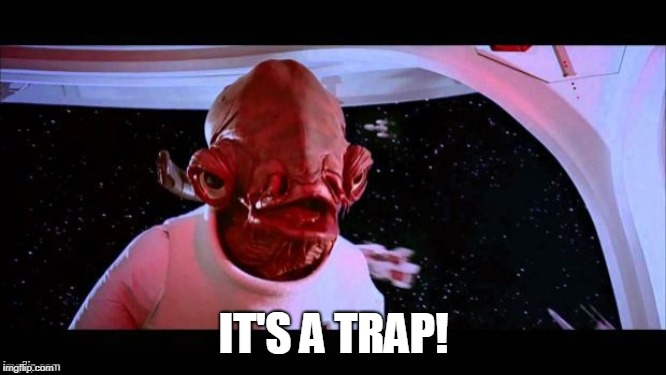
My pop culture-filled brain when thinking about this project (meme generated on imgflip.com)

Why? Even if this project simulates a professional project, I think it is the academic environment. I sometimes have this feeling that I haven’t felt since I finished college the first time. The pressure of meeting academic expectations seems more intense than the pressure I have felt in business environments. Not that I do not take my professional occupations seriously. Quite the opposite. And there are intrinsic and extrinsic motivators in both environments.

No, in this particular case, I think that the distinction between professional and academic environments is that, in a professional environment, I know I am qualified to do the job and collaborators inherently trust my expertise (I hope). On the other hand, I expect the academic environment to assess and validate constantly whatever task I undertake and this intensifies my doubts. Do other people feel this distinction? Is this only a remnant of my upbringing?

For this translation, my input may clash with the expectations of the French university professor. To everyone who asks me “Why not work for the EU? Or the UN?” (this happens a lot), I answer that apart from not being interested, I would most likely fail the exams because their expectations are so removed from the expectations of my preferred environment: business and technical translation.

This might be the same with academic translation. For example, anglicisms (in terminology or style) were frowned upon in my translation Master’s programme, so I would never use them. However, in a business context, I had to learn to use them to match customer preferences. Some anglicisms were harder to swallow and I had to push back on others that were plain wrong. But a wrong anglicism is hard to prove to a stubborn customer. That’s where experience comes in. Yes, our audience is made up of non-technical users, but our “customer”/assessor may have specific requirements.

I would be curious to find out how our team’s translation will fare, to see how it matches my expectations. As for reviewing the translation, we are lucky that the product exists in French with a glossary, so I will stick to comments and questions, and I will let our two translators be the experts. They have insights into the “customer”.